Emine Akbucak
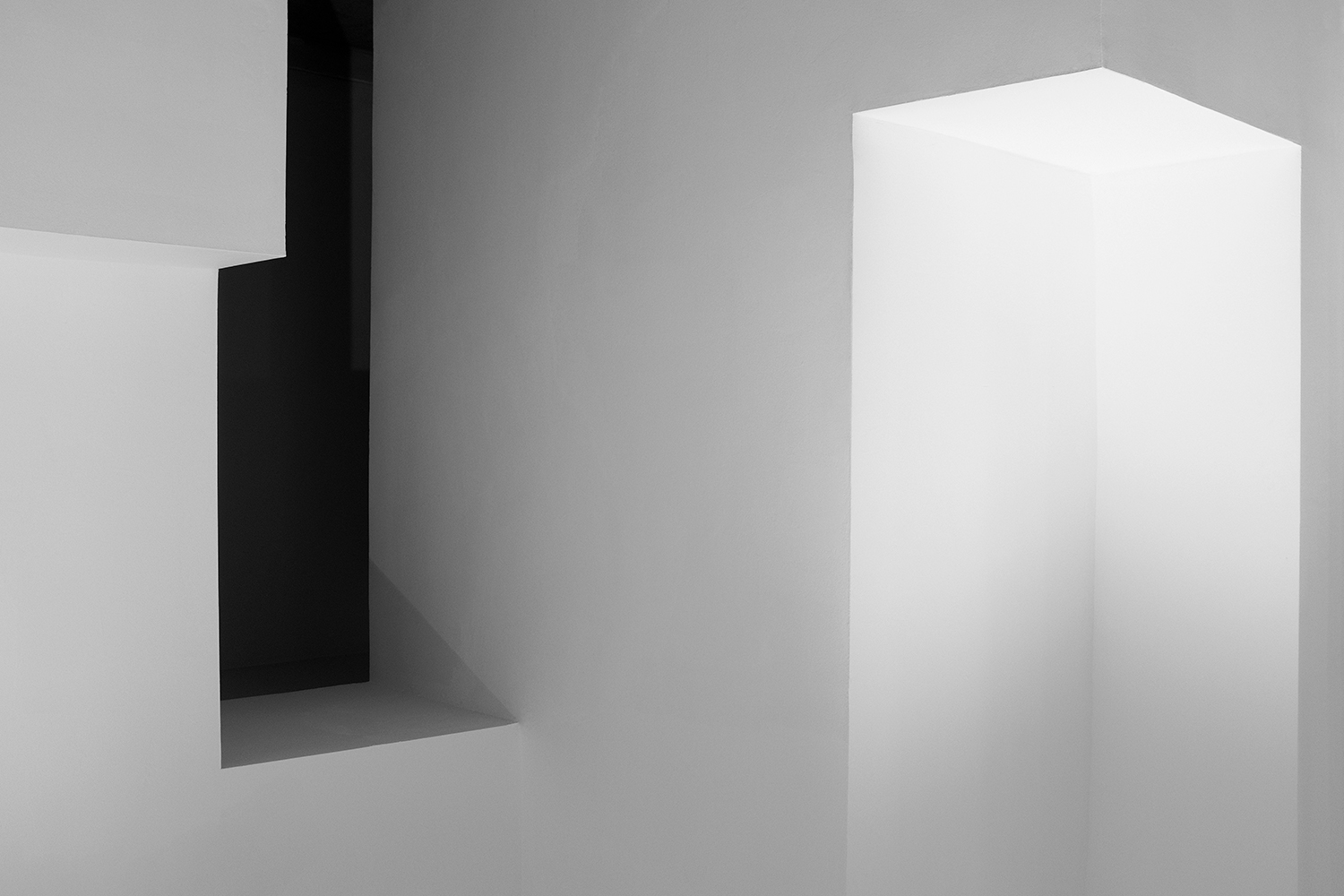
From the very first day I began creating with photography, my interest turned less toward reproducing the world I saw than toward questioning the act of seeing itself. I wanted to make visible what lies hidden within existing forms, to step outside the habitual gaze, and to free the photograph from being a mere instrument that records the visible. Over time, this search led me toward an abstract visual language — not as an aesthetic preference, but as a natural consequence of the relationship I form with the world.
The starting point of my work is the transformation of form: a process that belongs not only to the image but to perception and experience. The works I develop through photography, video, and installation reach beyond documentation, searching for the as-yet-unnamed relationships, rhythms, and possibilities held within the visible.
For more than twenty years, my practice has taken shape along two axes: water and light. Both are fields of inquiry that show how form is never fixed, but is reconstituted moment by moment. The fluidity of water — its ability to continue on its way by moving past obstacles, to remain at once fragile and strong without being bound to any solid form — has turned it, for me, into a model for thought. In time, this inquiry brought me to the notion of transparency. For me, the transparency of water suggests not only a physical quality but, on an individual level, a state in which our inner and outer selves become one — and the hope of building more transparent social structures.
I see water not as a subject but as a collaborator in the making of the work; with its movements, its sounds, and its transformative power, water is one of the essential elements that shapes the form of what I create. For this reason, my practice is concerned with process more than with outcome: I see art not as a body of completed works, but as a process that evolves alongside life and continually opens new questions.
This is also the source of my insistence on an abstract language. The abstract image does not confine the viewer to a single meaning; it invites them into the work with their memory, their intuition, their experience. Meaning is reconstituted in that encounter. For me, art is not something that explains, but a living encounter, continually renewed, among the artist, the work, and the viewer.